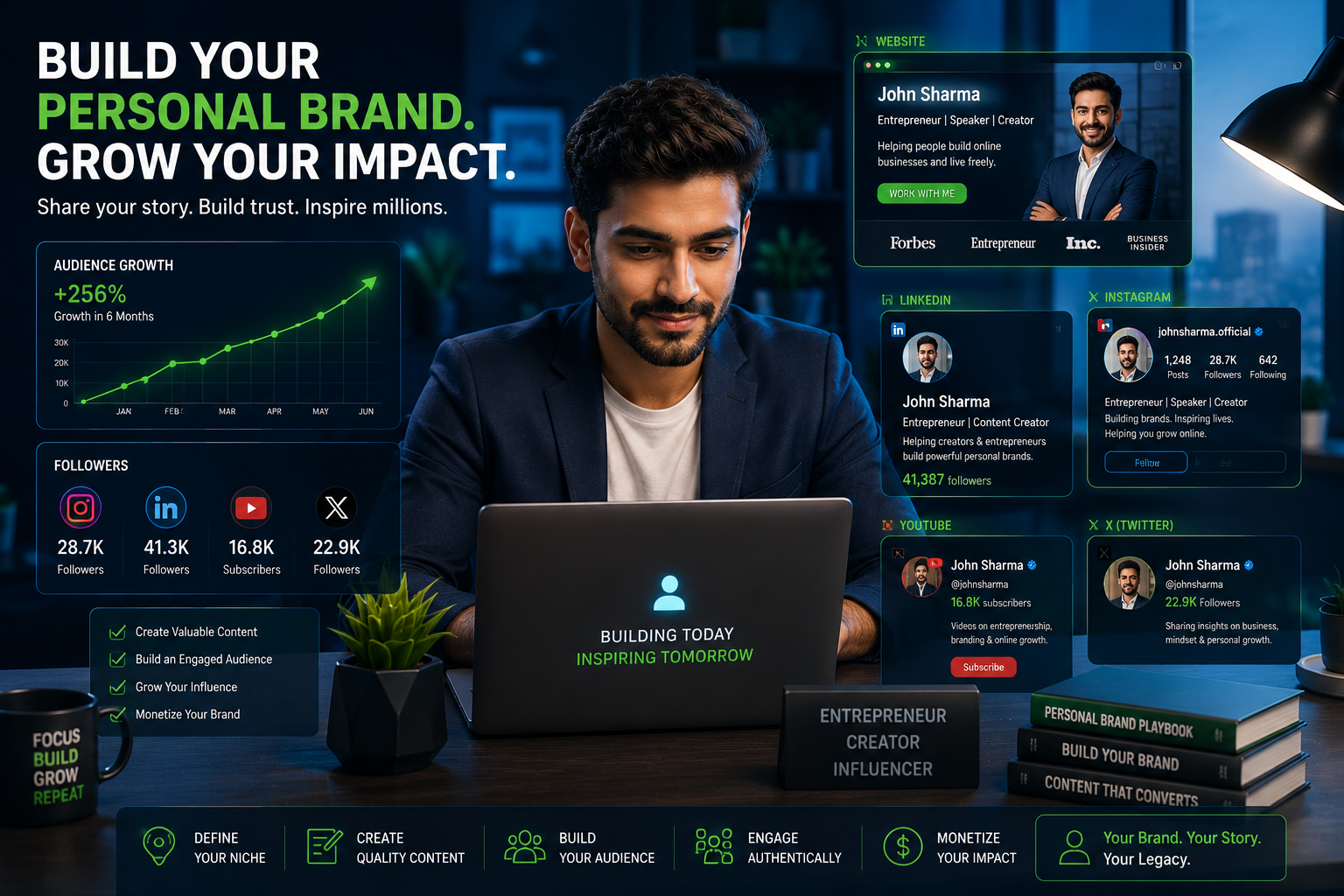
In today’s digital world, your personal brand can be one of your most valuable assets. Whether you’re a freelancer, entrepreneur, content creator, job seeker, or business professional, a strong personal brand can help you attract opportunities, build trust, and grow your influence.
People are more likely to work with, hire, or buy from individuals they know and trust. That’s why building a recognizable online presence has become increasingly important.
In this guide, you’ll learn how to build a personal brand that stands out in 2026.
What Is a Personal Brand?
A personal brand is how people perceive you online and offline.
It includes:
- Your reputation
- Your expertise
- Your content
- Your communication style
- Your online presence
Think of your personal brand as your professional identity in the digital world.
Why Personal Branding Matters
A strong personal brand can help you:
Attract New Opportunities
Employers, clients, and business partners often search for people online before making decisions.
Build Trust
People are more likely to trust someone who consistently shares valuable insights.
Increase Visibility
A recognizable brand helps you stand out from competitors.
Generate Income
Strong personal brands often lead to consulting, freelancing, sponsorships, and business opportunities.
Step 1: Define Your Niche
One of the biggest mistakes people make is trying to appeal to everyone.
Instead, focus on a specific niche.
Examples:
Technology
- AI
- Software
- Cybersecurity
Business
- Entrepreneurship
- Freelancing
- Startups
Marketing
- SEO
- Social media
- Content creation
The more focused your niche, the easier it becomes to build authority.
Step 2: Identify Your Target Audience
Ask yourself:
- Who do I want to help?
- What problems can I solve?
- What interests my audience?
Understanding your audience allows you to create more relevant content.
Step 3: Create a Professional Online Presence
Your online presence should be consistent across all platforms.
Essential Assets
Personal Website
A website gives you complete control over your online identity.
Professional Profile Photo
Use a clear and professional image.
Consistent Branding
Maintain the same colors, style, and messaging across platforms.
Step 4: Share Valuable Content
Content is one of the fastest ways to build authority.
You can create:
Blog Posts
Share expertise and insights.
Social Media Posts
Engage with your audience regularly.
Videos
Educational and informative content performs well.
Newsletters
Build a direct relationship with followers.
Step 5: Demonstrate Expertise
People trust experts.
Ways to demonstrate expertise include:
- Publishing tutorials
- Sharing case studies
- Teaching skills
- Solving problems publicly
Focus on helping others rather than constantly promoting yourself.
Step 6: Be Consistent
Consistency is one of the most important branding factors.
Many people quit before seeing results.
Consistency Areas
- Posting schedule
- Visual identity
- Messaging
- Audience engagement
Success often comes from showing up regularly.
Step 7: Build Relationships
Networking remains powerful in the digital age.
Engage With Others
- Comment on posts
- Participate in discussions
- Join communities
Collaborate
Work with people in your industry.
Strong relationships often create unexpected opportunities.
Step 8: Optimize Your Online Profiles
Make it easy for people to understand who you are.
Include
- Clear bio
- Professional photo
- Contact information
- Website links
- Areas of expertise
A well-optimized profile improves credibility.
Common Personal Branding Mistakes
Trying to Copy Others
Authenticity is more valuable than imitation.
Inconsistent Posting
Long periods of inactivity can slow growth.
Focusing Only on Followers
Engagement and trust are often more important than audience size.
Being Too Promotional
Provide value before asking for anything in return.
Best Platforms for Personal Branding
Excellent for professionals and business owners.
X (Twitter)
Great for sharing ideas and building authority.
YouTube
Ideal for long-form educational content.
Personal Blog
Provides full ownership of your content.
Useful for visual storytelling and audience engagement.
How AI Can Help Build Your Brand
AI tools can assist with:
- Content ideas
- Writing assistance
- Social media planning
- Research
- Audience analysis
However, your unique experiences and insights remain the foundation of a strong personal brand.
Personal Branding Trends in 2026
Emerging trends include:
AI-Assisted Content Creation
More creators are using AI to improve productivity.
Authentic Storytelling
Audiences increasingly value genuine experiences.
Community Building
Successful brands focus on relationships rather than just followers.
Educational Content
People continue seeking valuable information online.
Building a personal brand is one of the best investments you can make in your future. A strong brand can help you attract opportunities, grow your network, increase credibility, and generate income.
The key is consistency. Focus on sharing value, helping others, and demonstrating expertise over time. Small actions taken consistently often produce significant results.
Remember, your personal brand is not built overnight. It is developed through continuous effort and meaningful contributions.
Frequently Asked Questions
What is a personal brand?
A personal brand is the reputation and identity you build through your expertise, content, and online presence.
Why is personal branding important?
It helps build trust, attract opportunities, and establish authority in your industry.
How long does it take to build a personal brand?
Building a strong brand typically takes months or years of consistent effort.
Do I need a website for personal branding?
While not mandatory, a personal website provides greater control over your online presence.
Can AI help with personal branding?
Yes. AI can assist with content creation, planning, and productivity, but authenticity remains essential.