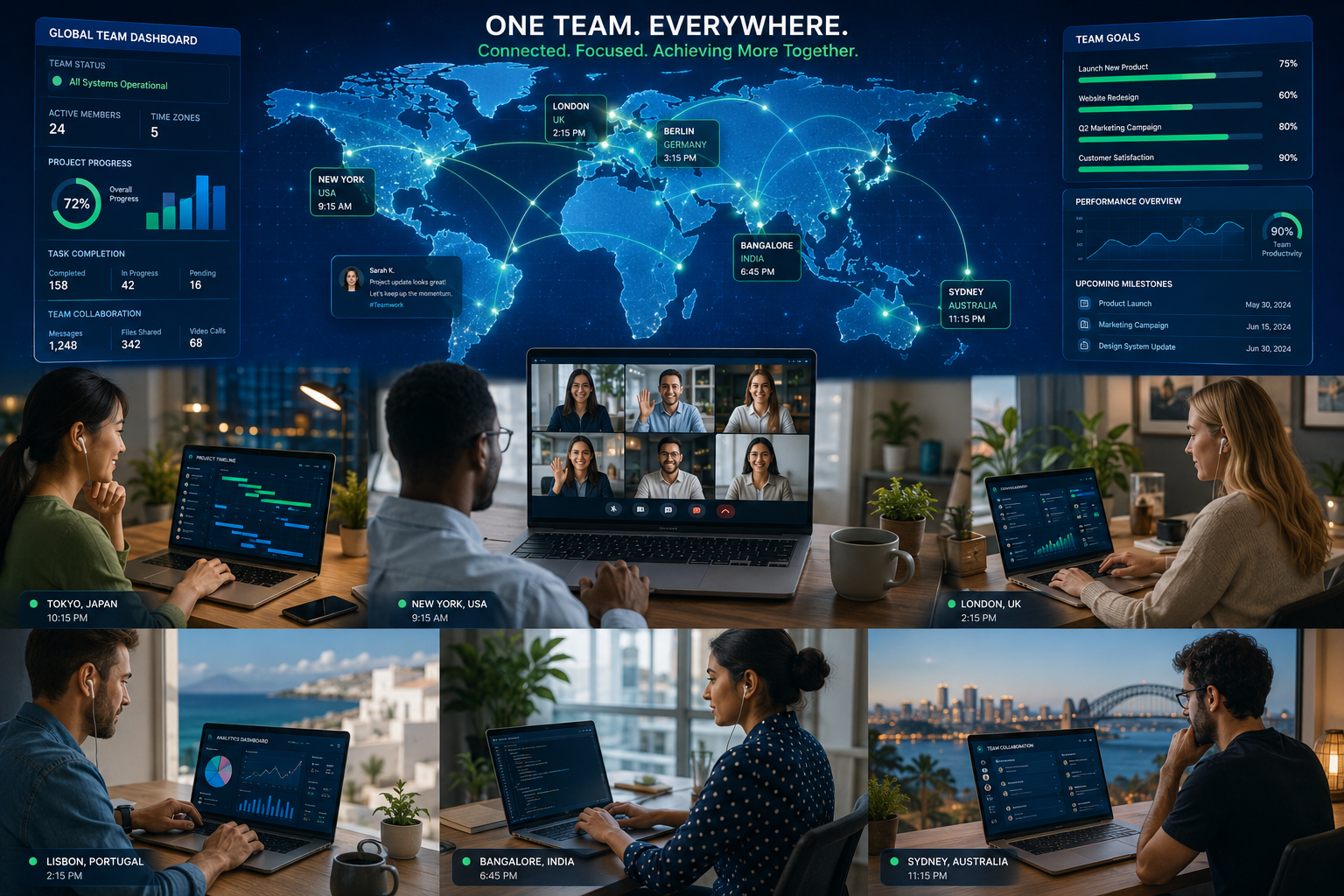
Remote work has transformed from a temporary solution into a permanent part of the modern workforce. Advances in technology, changing employee expectations, and global connectivity have made remote work more accessible than ever.
In 2026, businesses and professionals continue to embrace flexible work arrangements, creating new opportunities and challenges for workers worldwide.
This article explores the future of remote work and how individuals can thrive in this evolving landscape.
What Is Remote Work?
Remote work refers to performing professional duties outside a traditional office environment.
Employees and freelancers can work from:
- Home offices
- Co-working spaces
- Coffee shops
- Different cities or countries
Technology enables communication, collaboration, and productivity regardless of location.
Why Remote Work Continues to Grow
Several factors contribute to the expansion of remote work:
Improved Technology
Cloud computing, collaboration software, and AI tools make remote work more efficient.
Global Talent Access
Companies can hire skilled professionals from around the world.
Cost Savings
Organizations can reduce office-related expenses.
Employee Preferences
Many professionals prefer flexible work arrangements.
Trend 1: Hybrid Work Models
Many organizations are adopting hybrid models that combine remote and in-office work.
Benefits
- Greater flexibility
- Better collaboration
- Improved work-life balance
Hybrid work is expected to remain a dominant workplace strategy.
Trend 2: AI-Powered Productivity
Artificial Intelligence is changing how remote professionals work.
AI Helps With
- Scheduling
- Research
- Content creation
- Task automation
- Data analysis
AI tools allow workers to accomplish more in less time.
Trend 3: Global Hiring
Location is becoming less important for many roles.
Opportunities
Professionals can work for companies in different countries without relocating.
Benefits
- Higher earning potential
- More job opportunities
- Diverse work experiences
Trend 4: Rise of Freelancing
Remote work has fueled the growth of freelancing.
Popular Freelance Fields
- Writing
- Graphic design
- Web development
- SEO
- Digital marketing
- AI consulting
Freelancing offers flexibility and income diversification.
Trend 5: Digital Nomad Lifestyle
More professionals are choosing to work while traveling.
Advantages
- Freedom
- Cultural experiences
- Flexible lifestyles
Reliable internet access has made this lifestyle increasingly practical.
High-Demand Remote Careers in 2026
Software Development
Developers remain highly sought after globally.
Digital Marketing
Businesses require online growth strategies.
AI Specialists
AI adoption continues expanding.
Data Analysts
Organizations increasingly rely on data-driven decisions.
Cybersecurity Professionals
Demand for digital security expertise remains strong.
Skills Needed for Remote Work Success
Communication
Clear communication is essential in remote environments.
Time Management
Remote professionals must manage schedules effectively.
Self-Discipline
Productivity often depends on personal accountability.
Technology Skills
Comfort with digital tools is increasingly important.
Adaptability
Remote work environments change rapidly.
Benefits of Remote Work
Flexibility
Workers often have greater control over schedules.
Reduced Commuting
Eliminating daily commutes saves time and money.
Global Opportunities
Professionals can access jobs beyond their local markets.
Improved Work-Life Balance
Many people appreciate increased flexibility.
Challenges of Remote Work
Isolation
Remote workers may feel disconnected from colleagues.
Distractions
Home environments can sometimes reduce productivity.
Communication Gaps
Virtual communication requires extra effort.
Burnout
Some professionals struggle to separate work from personal life.
How to Stay Productive While Working Remotely
Create a Dedicated Workspace
A professional environment improves focus.
Establish a Routine
Consistent schedules support productivity.
Use Productivity Tools
Task management software can improve organization.
Take Breaks
Regular breaks support long-term performance.
Set Boundaries
Clearly separate work and personal time.
Best Tools for Remote Workers
Communication
- Video conferencing platforms
- Team messaging tools
Project Management
- Task tracking systems
- Collaboration platforms
Productivity
- AI assistants
- Calendar tools
- Note-taking applications
These tools help remote teams collaborate effectively.
How Businesses Can Support Remote Teams
Organizations can improve remote work success by:
Providing Clear Expectations
Employees perform better when responsibilities are understood.
Encouraging Communication
Regular interaction strengthens team connections.
Offering Training
Continuous learning improves performance.
Prioritizing Employee Well-Being
Healthy employees are often more productive.
Future Predictions for Remote Work
Several developments are likely:
Increased AI Integration
AI will continue supporting productivity.
More Flexible Employment Models
Workers may have greater choice in how they work.
Enhanced Virtual Collaboration
Technology will improve remote teamwork.
Expansion of Global Talent Markets
Geographic barriers will continue decreasing.
Opportunities for Readers of GrowthTechDaily.com.ng
Remote work creates opportunities in areas such as:
- Freelancing
- AI services
- Content creation
- Blogging
- Digital marketing
- Online consulting
Developing digital skills today can open doors to remote opportunities tomorrow.
Conclusion
Remote work is no longer a temporary trend. It has become a major component of the modern workforce and will continue evolving throughout 2026 and beyond.
Professionals who develop strong digital skills, embrace technology, and maintain effective work habits will be well-positioned to succeed in this changing environment.
The future of work is flexible, digital, and increasingly global.
Frequently Asked Questions
Is remote work still growing in 2026?
Yes. Many companies continue offering remote and hybrid work options.
What skills are important for remote workers?
Communication, time management, adaptability, and digital literacy are essential.
Can remote work increase income opportunities?
Yes. Remote work often provides access to global job markets.
Which industries offer remote jobs?
Technology, marketing, education, consulting, and customer support are common examples.
Will AI affect remote work?
Yes. AI is improving productivity and changing how remote professionals perform tasks.